


Propellers, Pitch and Fuel Consumption
A boat's outboard engine can be in excellent condition and still deliver poor performance if the propeller is incorrectly matched to the boat.
The propeller is the component that converts engine power into thrust. Its diameter, pitch, blade design and condition affect acceleration, cruising speed, engine RPM, load carrying ability and outboard fuel consumption.
For Kenyan boat owners, understanding propeller pitch is particularly useful when operating fishing boats that regularly carry changing loads. A boat may perform differently when it is empty, carrying a full crew, loaded with fishing gear or returning with a catch.
Choosing the right propeller is therefore not simply about finding one that fits the engine shaft. The propeller needs to work with the engine, hull and normal operating load.
What Is a Boat Propeller?
A boat propeller is a rotating device attached to the outboard's propeller shaft.
As the blades rotate through the water, they generate thrust that moves the boat forward or backward.
Most outboard propellers have several important characteristics:
- Diameter
- Pitch
- Number of blades
- Blade shape
- Material
- Hub design
These characteristics influence how the engine's available power is transferred into the water.
A propeller that is incorrectly matched can prevent the engine from reaching its recommended operating RPM or allow it to exceed that range.
What Does Propeller Pitch Mean?
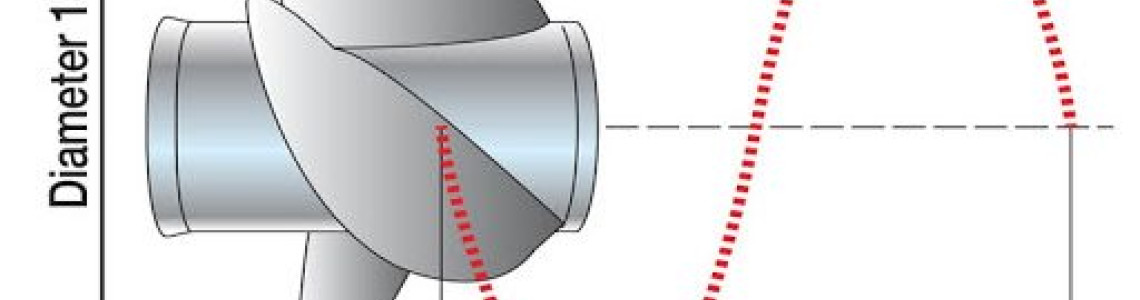
Propeller pitch describes the theoretical distance a propeller would travel forward during one complete revolution if it were moving through a solid medium without slipping.
For example, a propeller described as having a 15-inch pitch theoretically advances 15 inches per revolution under ideal conditions.
Water is not a solid material, however, so real propellers experience slip.
The important point for boat owners is that higher pitch generally loads the engine more heavily, while lower pitch generally allows the engine to turn more easily.
This makes pitch one of the most important factors in propeller selection.
High Pitch vs Low Pitch
A higher-pitch propeller can potentially produce greater boat speed when the engine and hull can support it.
However, it places more load on the engine.
A lower-pitch propeller generally allows the engine to reach higher RPM more easily.
It can improve acceleration and may be useful when the boat regularly carries heavy loads, although the final choice must remain within the engine manufacturer's specifications.
The correct propeller is the one that allows the engine to operate within its recommended RPM range under the manufacturer's specified test conditions.
Why Engine RPM Matters
Outboard manufacturers specify a recommended full-throttle operating RPM range.
This range is important because the engine is designed to operate safely and efficiently within it.
A propeller with excessive pitch can prevent the engine from reaching the recommended RPM.
A propeller with too little pitch can allow the engine to exceed the recommended RPM.
Both situations can cause problems.
Engine Cannot Reach Recommended RPM
If the engine is overloaded by the propeller, it may struggle to reach its recommended operating range.
Possible causes include:
- Excessive propeller pitch
- Oversized propeller
- Excessive boat load
- Hull fouling
- Damaged propeller
- Engine problems
The engine may feel sluggish and consume more fuel while working harder.
Engine Exceeds Recommended RPM
If the propeller does not provide enough load, the engine may rev beyond its recommended range.
Possible causes include:
- Propeller pitch that is too low
- Incorrect propeller size
- Very light boat loading
- Damaged or improperly selected propeller
Operating outside the manufacturer's recommended range should be avoided.
How Propeller Pitch Affects Speed
It is tempting to assume that increasing pitch will always make a boat faster.
That is not necessarily true.
If the pitch is increased beyond what the engine and hull can handle, the engine may lose RPM.
The boat can then become slower rather than faster.
Think of it like changing gears on a vehicle.
A higher gear can be useful when the engine has enough power, but selecting too high a gear when climbing a hill can make the engine struggle.
The propeller has a similar relationship with the engine.
Propeller Pitch and Heavy Loads
Fishing boats often operate with changing loads.
A boat may leave shore carrying:
- Crew
- Fuel
- Fishing gear
- Ice
- Water
- Safety equipment
When it returns, it may also carry a substantial catch.
The same propeller therefore has to work under different conditions.
A propeller that performs well on a lightly loaded boat may not deliver the same acceleration when the vessel is heavily loaded.
This is one reason commercial operators need to select a propeller around the boat's normal working conditions rather than its empty condition.
Outboard Fuel Consumption and Propeller Choice
Propeller selection can influence outboard fuel consumption because it determines how much load the engine must overcome.
An incorrectly matched propeller may force the engine to work outside its efficient operating range.
However, fuel consumption is influenced by many other factors, including:
- Engine size
- Engine condition
- Boat weight
- Hull design
- Speed
- Sea or lake conditions
- Throttle setting
- Load
- Propeller condition
- Operator behaviour
Therefore, changing the propeller is not guaranteed to reduce fuel consumption in every situation.
The objective is to match the propeller correctly so that the engine can operate as intended.
How to Know If the Propeller Is Wrong
Several signs can indicate a propeller-selection problem.
Poor Acceleration
If the boat takes too long to get moving, the propeller may be providing excessive load.
However, check the engine and hull condition before blaming the propeller.
Engine Cannot Reach Recommended RPM
This is one of the strongest indicators that the propeller or boat load needs investigation.
Excessive Engine RPM
If the engine exceeds its recommended RPM at full throttle, the propeller may not be providing sufficient load.
Poor Fuel Economy
An incorrectly matched propeller can contribute to inefficient operation.
But fuel consumption should also be checked against load, hull condition, engine condition and operating speed.
Heavy Vibration
Vibration can result from a damaged or bent propeller.
It can also indicate other mechanical problems.
Loss of Speed
A damaged blade or unsuitable propeller can reduce thrust.
A sudden reduction in performance should be investigated rather than solved simply by changing pitch.
Propeller Diameter
Pitch is important, but diameter also matters.
Propeller diameter affects the amount of water the propeller can move and the load placed on the engine.
The correct diameter depends on the engine, propeller design and manufacturer's specifications.
Boat owners should not select diameter independently of the engine manufacturer's recommended propeller range.
Three-Blade vs Four-Blade Propellers
Three-blade propellers are common and can provide a good balance between acceleration, speed and efficiency.
Four-blade propellers have an additional blade and can provide useful characteristics for certain applications.
Depending on the boat and engine, a four-blade design may offer:
- Stronger low-speed thrust
- Improved grip
- Better acceleration
- Reduced ventilation in some conditions
- Improved load-carrying performance
However, adding a blade does not automatically make a propeller better.
The correct design depends on the hull and operating objective.
Aluminium vs Stainless-Steel Propellers
Propellers are available in different materials.
Aluminium propellers are widely used because they are generally lighter and less expensive.
Stainless-steel propellers can provide greater strength and may allow more refined blade designs.
The choice depends on:
- Budget
- Boat use
- Water conditions
- Performance requirements
- Risk of impact
- Engine size
For a working fishing boat, the most expensive propeller is not necessarily the most practical option.
Propeller Damage and Performance
Even a propeller that was originally the correct size can become unsuitable after damage.
A bent blade changes the way the propeller moves through the water.
Dents, cracks or uneven blade surfaces can reduce efficiency and create vibration.
After striking an underwater object, inspect the propeller carefully.
Do not assume that it is safe simply because the boat continues moving.
Fishing Line Around the Propeller Shaft
Fishing boats can encounter another problem: fishing line wrapping around the propeller shaft.
Line can become tightly wound around the shaft and potentially damage seals.
Water can then enter the gearcase.
Whenever fishing line becomes wrapped around an outboard propeller, inspect the shaft area carefully and check the gearcase according to the manufacturer's maintenance recommendations.
Propeller Selection for Kenyan Fishing Boats
Kenyan fishing boats can operate under very different conditions.
A boat working on Lake Victoria may have different requirements from one operating in coastal waters.
Similarly, a small recreational boat may have very different loading requirements from a commercial fishing vessel.
When selecting a propeller, consider:
- Hull design
- Engine horsepower
- Manufacturer's RPM range
- Boat weight
- Typical crew
- Fishing gear
- Fuel load
- Expected catch
- Operating water
- Desired cruising speed
A propeller should be selected based on the complete operating system.
Freshwater vs Saltwater Operation
The water environment can influence propeller condition.
In saltwater, corrosion can affect exposed metal components and fasteners.
In freshwater, impact from submerged objects, vegetation and fishing equipment can still cause damage.
Boat owners should inspect propellers regularly regardless of where they operate.
For coastal vessels, rinsing and corrosion-control procedures should be part of normal maintenance.
Propeller Testing
The most useful way to evaluate a propeller is through a controlled test.
The boat should be tested under conditions that represent its normal operating configuration.
Record:
- Engine RPM
- Boat speed
- Fuel consumption where measurable
- Load
- Water conditions
- Throttle setting
The engine should reach the manufacturer's recommended full-throttle RPM range.
If it cannot, investigate the propeller, boat load and engine condition.
If it exceeds the recommended range, the propeller setup should also be reviewed.
Don't Test Only an Empty Boat
A common mistake is testing the boat when it is nearly empty and assuming the result represents normal operation.
A commercial fishing boat should be evaluated under a realistic working load.
An engine and propeller combination that works well with minimal weight may perform poorly when the boat is carrying crew, equipment and catch.
The objective is not to achieve the highest possible speed under ideal conditions.
The objective is to achieve appropriate performance under the conditions in which the boat normally works.
Fuel Consumption Testing
Fuel economy should also be measured under realistic conditions.
For a commercial boat, record fuel use over several trips rather than relying on one measurement.
Note:
- Distance travelled
- Operating hours
- Engine RPM
- Throttle setting
- Boat load
- Water conditions
- Fuel used
This allows the operator to establish a practical baseline.
If fuel consumption suddenly increases, investigate before assuming the propeller is responsible.
Possible causes include:
- Hull fouling
- Damaged propeller
- Engine problems
- Increased load
- Rough water
- Poor engine maintenance
Hull Condition and Fuel Burn
The propeller is not the only factor affecting fuel use.
A dirty or damaged hull creates additional resistance.
That means the engine needs to produce more thrust to maintain the same speed.
For boats kept in the water for extended periods, hull condition should therefore be included in fuel-consumption investigations.
If the hull becomes heavily fouled, changing the propeller may not solve the underlying problem.
Operating Speed and Fuel Consumption
Boat owners should also consider how speed affects fuel use.
Increasing speed generally requires substantially more propulsion power because water resistance increases as the boat moves faster.
A commercial operator may therefore find that an efficient cruising speed provides a better balance between:
Speed + fuel consumption + engine workload + trip time
The fastest possible speed is not necessarily the most economical speed.
Propeller Selection Mistakes
Choosing Pitch Based Only on Speed
Higher pitch does not automatically mean higher speed.
Ignoring the Manufacturer's RPM Range
The engine should operate within the specified range.
Testing Without the Normal Load
A fishing boat should be evaluated under realistic operating conditions.
Continuing to Use a Damaged Propeller
A bent or damaged propeller can reduce performance and create vibration.
Changing Propeller Without Checking the Engine
Poor engine performance can sometimes look like a propeller problem.
Focusing Only on Fuel Consumption
Fuel economy must be evaluated together with engine RPM, speed and load.
When Should You Change a Propeller?
A propeller may need replacement or repair when it has:
- Cracked blades
- Severe dents
- Bent blades
- Significant corrosion
- Damaged hub
- Excessive vibration
- Repeated loss of performance
A propeller may also need to be changed when the boat's operating requirements have changed.
For example, an operator who changes from a lightly loaded recreational setup to a commercial fishing configuration may need to reassess the propeller.
A Practical Propeller Selection Checklist
Before purchasing a propeller, record:
Engine
- Manufacturer
- Model
- Horsepower
- Recommended full-throttle RPM range
Boat
- Length
- Hull type
- Approximate weight
- Maximum load
- Typical operating load
Current Propeller
- Diameter
- Pitch
- Number of blades
- Material
- Condition
Performance
- Maximum RPM
- Cruising RPM
- Speed
- Fuel consumption
- Acceleration
This information gives a marine technician or propeller specialist a much better starting point.
Propeller Maintenance
Once the correct propeller has been selected, maintain it properly.
Inspect it regularly.
Remove fishing line and other material from the propeller shaft.
Check for impact damage.
Ensure the propeller hardware is correctly installed and secured.
If vibration develops, stop and investigate.
A propeller should not be treated as a component that only needs attention when it breaks.
Final Thoughts on Boat Propeller Pitch
Boat propeller pitch is one of the most important factors affecting how an outboard transfers engine power into the water.
A higher pitch can place more load on the engine, while a lower pitch generally allows the engine to reach higher RPM more easily. Neither is automatically better.
The correct propeller is the one that works within the manufacturer's specified operating range while providing appropriate performance for the boat's normal load and intended use.
For Kenyan fishing and marine operators, this means considering the complete working environment. Lake and coastal boats may have different requirements, while commercial vessels can experience major changes in weight between departure and return.
If the engine cannot reach its recommended RPM, exceeds the specified range, vibrates excessively or suddenly consumes more fuel, the propeller should be one of the components investigated.
At the same time, check the hull, engine condition, load and operating conditions.
Good propeller selection is ultimately about balance: the right pitch, diameter, blade configuration and engine combination for the boat's actual work.
Marine and Fishing Equipment
Maimun Fishing & Tackles supplies equipment for fishing and marine operations.
Explore MFT's Fishing Accessories and wider fishing equipment range when planning equipment for your boat.
For equipment enquiries, visit the MFT Contact Page.
Leave a Comment